

Choosing window treatments can be more involved than you might think. You have to consider how much natural light you want, how much privacy you need, the style of your room, and how the finished window treatment will work with everything else in your home.
Custom draperies are a great way to bring all those elements together. They add softness, color, texture, and personality to a room while helping create a more finished, intentional appearance. And with so many fabric choices, patterns, heading styles, and design possibilities, you can make them as simple or as decorative as you want.
At Vonderheide Floor Coverings, we offer custom draperies through Carole Fabrics, along with Hunter Douglas blinds and shades. Whether you're dressing one window or coordinating treatments throughout your home, here are some things to consider when choosing the right draperies.
Start With What You Want Your Draperies to Accomplish
Before choosing a fabric or falling in love with a particular pattern, think about what you actually want your window treatments to do.
Are you primarily looking to add decoration and soften the appearance of a room? Do you need more privacy? Are you trying to reduce glare, manage sunlight, or make a bedroom darker?
Those answers will help determine what kind of draperies make the most sense.
For example, if you love the look of fabric panels framing your living room windows but rarely intend to close them, decorative side panels might be all you need. They can add color and texture without getting in the way of your view or natural light.
On the other hand, if you want to regularly close your draperies for privacy or light control, you'll want to consider functional panels that are designed to open and close.
There's also no rule that says draperies have to handle every job themselves. In many homes, combining draperies with blinds or shades is actually the better solution. We'll get into that a little later.
Choose a Fabric That Complements Your Room
Fabric selection is one of the biggest decisions you'll make when designing custom draperies. It affects not only how your window treatments look but also how they hang, move, and feel in the room.
Carole Fabrics offers a variety of fabric options, giving you the ability to choose from different colors, patterns, textures, and levels of visual interest.
Here are a few things to think about:
Color: Do you want your draperies to blend into the room or stand out as an accent? Neutral colors can create a timeless appearance and coordinate easily with changing furniture and décor. A bolder color can introduce contrast and become a focal point.
Pattern: Patterns can add personality, especially in rooms where the furniture, walls, and flooring are relatively simple. If you already have several patterns competing for attention, a solid or more subtle fabric might be the better choice.
Texture: Don't underestimate what texture can do for a room. Even a neutral-colored drapery can add visual depth through its fabric. Depending on the look you're after, you might prefer something smooth and understated or a fabric with more noticeable texture.
Weight and drape: Lightweight fabrics tend to create a softer, more relaxed appearance, while heavier fabrics generally produce fuller, more substantial folds. The weight of the material also influences how the finished draperies hang.
One thing we always encourage homeowners to do is look at actual fabric samples before making a final decision. A color or pattern can look completely different on a computer screen than it does in your home, especially when natural light changes throughout the day.
Consider the Drapery Style and How It Hangs
The way draperies are constructed at the top makes a significant difference in their overall appearance.
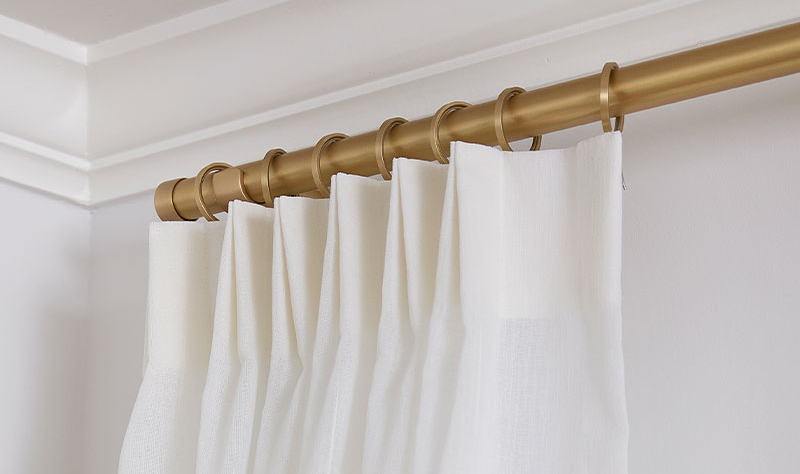
You might hear terms like pinch pleat, goblet pleat, tailored pleat, inverted pleat, ripplefold, or grommet when shopping for custom draperies. These refer to different ways the fabric is gathered, attached, and arranged along the top of the window treatment.
Some styles create a more traditional, structured appearance with defined pleats. Others produce softer, more continuous folds that feel contemporary and streamlined.
Neither approach is necessarily better. It comes down to the style of your home and the appearance you want to achieve.
For a more formal living room or dining room, a traditional pleated style might be a natural fit. For a contemporary home with large windows, a ripplefold style could be a better match.
You should also consider how the draperies will operate. Some panels are primarily decorative and remain stationary, while others are designed to open and close regularly.
The important thing is to choose a construction style that complements the fabric and works with the way you intend to use the window.
Think About Length, Fullness, and Placement
Even beautiful fabric can look out of place if the proportions aren't right.
One of the most important decisions is how long your draperies should be. Floor-length draperies are a popular choice because they create a continuous, elegant appearance and can make a room feel taller.
You can also install the drapery rod higher than the actual window frame to draw the eye upward and create the impression of additional ceiling height. Extending the rod beyond the sides of the window can make the window appear wider while allowing more natural light into the room when the panels are open.
Fullness matters, too. Draperies need enough fabric to create attractive folds when they're closed. If there isn't enough material, they can look flat or undersized. The amount of fullness needed depends on the heading style, fabric, and overall design.
These details are particularly important with custom window treatments because the goal is to create something that looks like it belongs in the room rather than something that was simply made to fit the window.
Don't Be Afraid to Layer Draperies With Blinds or Shades
One of our favorite ways to approach window treatments is to combine custom draperies with Hunter Douglas blinds or shades.
Why? Because each product serves a different purpose.
Blinds and shades are generally better suited for everyday light control and privacy. Draperies bring the decorative element, adding softness, warmth, texture, and another layer of design.
Together, they can create a window treatment that's both attractive and functional.
For example, imagine a living room with large windows that receive direct afternoon sunlight. A Hunter Douglas roller shade can help manage glare and sunlight throughout the day, while decorative drapery panels frame the window and complement the rest of the room.
In a bedroom, you might pair a room-darkening shade with custom draperies. The shade provides the light control you need for sleeping, while the draperies add the finished look you're after.
You can also incorporate Hunter Douglas cellular shades, Roman shades, and other styles depending on the room and your priorities.
And if convenience is important, consider Hunter Douglas PowerView® Automation on compatible window treatments. You can control your shades through an app, remote, voice assistant, or scheduled settings.
The biggest advantage of layering is that you're not asking one product to do everything. You're choosing the right combination to accomplish different goals.
Coordinate Your Draperies With the Rest of Your Home
Draperies shouldn't necessarily match everything in a room, but they should complement it.
Think about your flooring, furniture, wall colors, area rugs, and other decorative elements. These all contribute to the overall appearance of a space.
For example, if you have hardwood floors, neutral furniture, and relatively simple walls, patterned draperies could introduce some personality without overwhelming the room.
If your room already has bold furniture, colorful rugs, or patterned wallpaper, more understated draperies might create a better balance.
It's also worth thinking beyond the individual room. If your living room, dining room, and kitchen are open to one another, you'll want your window treatments to feel coordinated, even if they're not identical.
This doesn't mean every window in your home needs the same fabric or style. It means considering how the different treatments work together when you can see them from one space to another.
Get Help Choosing Custom Draperies at Vonderheide Floor Coverings
Choosing custom draperies involves more than picking out a pretty fabric. You have to consider the room, the window dimensions, how much light and privacy you need, the construction style, and how everything will work together.
That's where having someone walk you through the options can make a difference.
At Vonderheide Floor Coverings, we offer custom draperies through Carole Fabrics and Hunter Douglas blinds and shades. Our design consultants can help you explore different fabrics, colors, patterns, and styles to find a combination that makes sense for your home.
We also offer free in-home measurements, so we can look at your actual windows and help determine what will work best.
Whether you're looking for simple decorative panels, elegant custom draperies, or a layered combination of draperies and motorized shades, we'd be happy to help.
Stop by our showroom at 105 N. 14th Street in Pekin to see what's possible.
Vonderheide Floor Coverings. Flooring people since 1947.
