

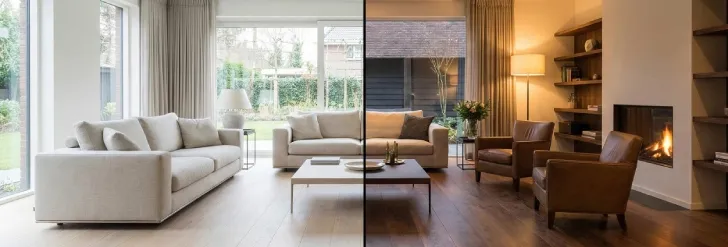
Choosing a flooring color can seem simple until you start looking at all the options. Should you go light or dark? Warm or cool? Should the flooring match your cabinets? Should every room have the same floor?
After years of helping homeowners choose flooring, we've learned that there isn't one flooring color that is right for every home. The best choice depends on the room, the lighting, the colors already in the space, and the overall look you're trying to achieve.
At Vonderheide Floor Coverings, we believe one of the most important things you can do is look beyond the flooring sample itself. Instead, consider how that color will actually look in your home.
Start With the Lighting in Your Room
One of the biggest reasons people end up unhappy with their flooring color is the lighting in the room where the flooring will be installed.
Natural light can make a flooring color look brighter and lighter, while low or artificial light can make the same flooring appear darker. The direction and amount of sunlight coming into a room can also change how the color looks throughout the day.
That's why we recommend taking flooring samples home before making your final decision.
When you're in our showroom, ask one of our salespeople if you can borrow the sample or samples you're considering. Take them home and look at them in the actual room where the flooring will be installed.
Pay attention to how the sample looks:
In the morning
In the afternoon
In the evening
In natural sunlight
With the room's artificial lighting
Against your walls, cabinets, furniture, and other finishes
A flooring color that looks perfect under showroom lighting may look completely different in your home.
Pay Attention to Flooring Undertones
Another important factor that can easily get overlooked is the flooring's undertone.
An undertone is the subtle color underneath the primary color you see. Flooring can have warm undertones, such as golden, honey, beige, or brown, or cooler undertones that lean toward gray, blue, or other cooler shades.
The flooring doesn't necessarily have to be an exact match for everything else in the room, but its undertone should generally work with the colors that are already there.
Warm Undertones
If your home has warm colors in the cabinets, walls, furniture, or other finishes, a flooring color with a warm undertone will generally blend more naturally.
For example, if your space includes beige, tan, cream, or gold tones, you might look at flooring colors such as:
Honey
Golden oak
Warm brown
Other warm wood tones
Cool Undertones
If your room leans cooler, you may want to consider flooring with a cooler undertone.
Spaces featuring white, gray, or blue tones may work particularly well with:
Grayish brown
Soft gray
Cooler wood tones
Other flooring colors with subtle cool undertones
The important thing is to consider the overall look of the room rather than picking a flooring color in isolation.
Consider the Colors You Already Have
Before you start shopping for flooring, take a look around the room.
What color are your walls? What color are your cabinets? What furniture will remain in the room? Are there other permanent finishes, such as countertops, backsplashes, fireplaces, or tile, that you need to coordinate with?
Taking photos of your space ahead of time can be extremely helpful.
Take several photos from different angles and in different lighting conditions. Make sure the photos show your wall colors, cabinet colors, furniture, and other important features of the room.
You can then bring those photos with you when you're shopping for flooring. They can give you and your flooring salesperson a much better idea of what you're working with than simply describing the room.
Should You Choose Light or Dark Flooring?
If someone were to walk into our showroom and ask us whether they should choose light or dark flooring, we'd first want to know more about their room. Lighting, existing colors, and the size and layout of the space all matter.
But if we're talking about the general characteristics of each, there are advantages and disadvantages to both.
Pros of Light Flooring
Light flooring can create a bright, relaxed look and works well with a wide variety of decorating styles.
It can give a room a casual and cozy feel while helping the space feel brighter and more open. That's one reason light flooring can be particularly appealing for families and high-traffic areas.
Cons of Light Flooring
There are some potential drawbacks, though. Depending on the room and the other finishes, a very light floor can sometimes create a washed-out appearance. Certain flooring materials can also be more prone to fading over time, depending on the product and its exposure to sunlight.
Pros of Dark Flooring
Dark flooring can create a bold, timeless, and sophisticated look. In a larger room, a dark floor can help ground the space and give it a more dramatic appearance.
Dark flooring can also be less prone to showing the visual effects of fading.
Cons of Dark Flooring
However, dark floors aren't perfect for every space. They can make a room feel smaller, particularly when combined with dark walls or limited natural light. Scratches and scuffs may also be more noticeable depending on the flooring material and color.
Ultimately, we don't recommend choosing light or dark flooring simply because someone says one is better. Start with the lighting and colors already present in your room, then consider the look you want to create.
Do You Need the Same Flooring Throughout Your Home?
Using the same flooring throughout your home has some significant advantages, but it's not necessarily the right choice for everyone.
One of the biggest benefits is that it can unify the design of your home. Using the same flooring in connected spaces can also make your home feel larger and more airy because there aren't as many visual breaks between rooms.
There's also a practical advantage: if all of your floors require the same type of care and maintenance, keeping them clean can be simpler.
But there are reasons to choose different flooring, too.
Using the same flooring everywhere can limit your choices. For example, if you have a large family and everyone has different preferences for their bedrooms, using one flooring throughout the entire house may mean compromising on what each person wants.
For someone with a more artistic or adventurous style, having the exact same flooring throughout the home may also feel bland or boring. Different flooring materials can help define different living zones and create different moods throughout the house.
There's no rule that says every room in your home has to have the same flooring. The key is making sure the different flooring choices work together.
Don't Fall in Love With a Flooring Sample Too Quickly
One of the easiest mistakes to make is falling in love with a flooring sample in the showroom and assuming it will look exactly the same at home.
We've seen firsthand why that's not always the case.
We once had a customer who loved a rich, dark brown Mohawk RevWood sample in our showroom. It looked great under the showroom lighting, and she was initially very excited about it.
But when she took it home, the combination of her lighting conditions, wall color, and room layout made the space feel smaller and darker than she wanted.
She ultimately chose a lighter flooring color that complemented the room's layout and lighting much better.
The original flooring wasn't a bad color. It simply wasn't the right color for her particular space.
That's an important distinction when choosing flooring. You're not just choosing a color you like. You're choosing a color that needs to work with everything else in the room.
Take Flooring Samples Home
This is one of the easiest things you can do to make a better flooring decision, and we encourage our customers to take advantage of it.
If you find several flooring colors you like in our showroom, ask one of our salespeople if you can borrow the samples and take them home.
Then put the samples where the flooring will actually be installed.
Look at them throughout the day. Move them around the room. Put them next to the cabinets, walls, furniture, and other finishes.
You may find that the flooring you liked best in the showroom isn't your favorite at home—and that's exactly what you want to discover before the flooring is installed.
Consider an In-Home Measurement
If you're having trouble deciding between flooring colors or simply want another opinion, an in-home measurement can be especially helpful.
At Vonderheide Floor Coverings, you can schedule a free in-home measurement. Tim or Kara can measure your space and, upon request, bring samples with them so you can see how different flooring options work in your actual home.
This gives you an opportunity to see the pros and cons of the flooring you liked in the showroom under the exact lighting and conditions where it will eventually be installed.
A Few Tips Before You Choose Your Flooring Color
Before making your final decision, we recommend keeping these things in mind:
Take photos of your room from multiple angles and in different lighting conditions.
Bring those photos with you when shopping for flooring.
Consider the undertones of your walls, cabinets, furniture, and other finishes.
Don't judge a flooring color solely by how it looks under showroom lighting.
Borrow samples and take them home before making your final decision.
Look at samples at different times of day and under different lighting.
Consider how light or dark flooring will affect the overall feel of your room.
Think about whether you want the same flooring throughout your home or different materials in different spaces.
Don't choose a flooring color simply because it's currently popular. Make sure it works with your home.
Ask a flooring professional for help if you're unsure how different colors and undertones will work together.
The Best Flooring Color Is the One That Works in Your Home
There is no universally perfect flooring color.
A beautiful dark brown floor can make one room feel sophisticated and grounded while making another room feel too dark. A light floor can make one space feel bright and airy while making another feel washed out. A warm floor can look beautiful alongside beige cabinets but clash with a room full of cool gray tones.
That's why we recommend looking at the entire room rather than choosing a flooring color based on a small sample or a picture online.
At Vonderheide Floor Coverings, we've been helping Central Illinois homeowners choose flooring since 1947. If you're not sure which flooring color will work best in your home, stop by our showroom, bring photos of your space, and talk with one of our salespeople. You can borrow samples to take home for free, or schedule a free in-home measurement with Tim or Kara and request samples to see your options in the actual space.
The goal isn't simply to find a flooring color you love in the showroom. It's to find one you'll love when you see it in your home every day.