

If your eyes are itchy, your nose won't stop running, or you find yourself sneezing more when you're at home, it's understandable to wonder whether your carpet is to blame.
Carpet can trap allergens and other irritants that enter your home from both inside and outside. Pet dander, dust, pollen, mold, and other pollutants can become trapped in carpet fibers. For some people, carpet fibers, padding, or even the adhesives used during installation can also contribute to irritation or allergic reactions.
But after decades of helping homeowners choose flooring, we've learned one important thing: don't automatically assume your carpet is the problem.
There are several possible sources of indoor allergens, and replacing your carpet isn't necessarily the first thing you should do. If you've ruled out other potential causes and talked with your doctor about your symptoms, then it may be time to take a closer look at your flooring.
The good news is that there are several ways to manage allergens in your home, including choosing carpet specifically designed to help reduce common household allergens.
What Can Cause Carpet Allergies?
Carpet itself doesn't necessarily cause allergies. More often, carpet can act as a place where microscopic irritants accumulate.
Some common culprits include:
Pet dander
Dust and dust-mite allergens
Pollen
Mold and other moisture-related contaminants
Outdoor pollutants tracked into the home
Certain carpet fibers, padding, or adhesives
Pollen and other pollutants can enter through open windows and doors or be carried inside on shoes. Pets can introduce dander and other allergens into the home. Dust naturally accumulates over time, and excessive humidity can create an environment where dust mites and mold can thrive.
That's why it's important to look at the whole home rather than immediately pointing the finger at the carpet.
How to Reduce Allergens in Your Carpet
If you suspect your carpet is contributing to your allergy symptoms, there are several things you can do before deciding to replace it.
Vacuum Regularly
Regular vacuuming is one of the simplest ways to remove allergens that have accumulated in carpet.
For people with allergies, consider using a vacuum with a high-efficiency particulate air (HEPA) filter. If you have pets, it's also worth choosing a vacuum designed to effectively pick up pet hair and dander.
Vacuuming at least once a week can help, although homes with pets or heavier allergen exposure may benefit from more frequent cleaning.
Keep Humidity Under Control
Humidity can play a major role in indoor air quality.
High humidity can create favorable conditions for dust mites and mold, so reducing excessive moisture in your home can help limit these potential sources of irritation. A dehumidifier may be helpful in areas of the home that tend to stay damp.
And if you're dealing with persistent moisture or suspected mold, don't assume the carpet is the root cause. The underlying moisture problem needs to be addressed.
Have Your Carpet Professionally Cleaned
Professional carpet cleaning can help remove dirt, dust, and other contaminants that regular vacuuming doesn't get.
Depending on the household, carpet may need professional cleaning several times a year. Homes with pets, children, or allergy concerns may require more frequent attention.
Cleaning is particularly worth considering if your carpet is otherwise in good condition and you aren't ready to replace it.
Consider Washable Area Rugs
If you're particularly sensitive to allergens, washable throw rugs can be another option. Unlike wall-to-wall carpet, many washable rugs can be removed and cleaned thoroughly in hot water.
This doesn't mean everyone with allergies needs to eliminate carpet. It's simply another option to consider depending on your particular situation.
Should You Replace Your Carpet If You Have Allergies?
Sometimes replacing carpet makes sense. But we wouldn't recommend making that decision based solely on allergy symptoms.
There are plenty of other possible sources of indoor irritation, including:
Furniture
Pets
Mold
Smoking
Excessive humidity
Pests
If you've addressed those possibilities and spoken with your doctor about your symptoms, then your carpet may be worth investigating.
The age and condition of the carpet matter, too. Carpet that's worn out, difficult to clean, or has been exposed to persistent moisture may be a different situation than relatively new carpet that's properly maintained.
And if you're allergic to the materials your carpet is made from, removing and replacing it may ultimately be the most comfortable option.
What About Carpet for People With Allergies?
There's a common assumption that anyone with allergies should avoid carpet and install a hard-surface floor instead.
It's not quite that simple.
Carpet can trap particles rather than allowing them to remain airborne, where they can be breathed in. With proper vacuuming and cleaning, those particles can then be removed.
The bigger question is what type of carpet you're choosing and how well it fits your household.
That's something we talk about with customers all the time at Vonderheide Floor Coverings. We don't want to simply sell you the most expensive flooring or tell you to replace something that doesn't need to be replaced. We want to understand what you're trying to solve.
A Real-World Example: When the Problem Isn't Just Allergies
We've had customers come to us with concerns involving odor, moisture, and carpet that was becoming difficult to clean.
In that situation, the answer wasn't simply, "Buy this carpet because it's better."
We looked at what they were actually dealing with and directed them toward Mohawk Pet Premier. It's inherently stain-resistant and backed by the All Pet® warranty. It can also be paired with SmartCushion underlayment with odor-fighting protection and a PureDefense moisture barrier.
That's an important distinction when choosing flooring.
If you're dealing with pets, odors, moisture, stains, or allergies, you need to identify the actual problem before choosing a product. Different carpet technologies are designed to address different concerns.
Mohawk SmartStrand With Pur-Ease Technology
For homeowners specifically concerned about common household allergens, Mohawk has introduced a carpet technology that takes a different approach.
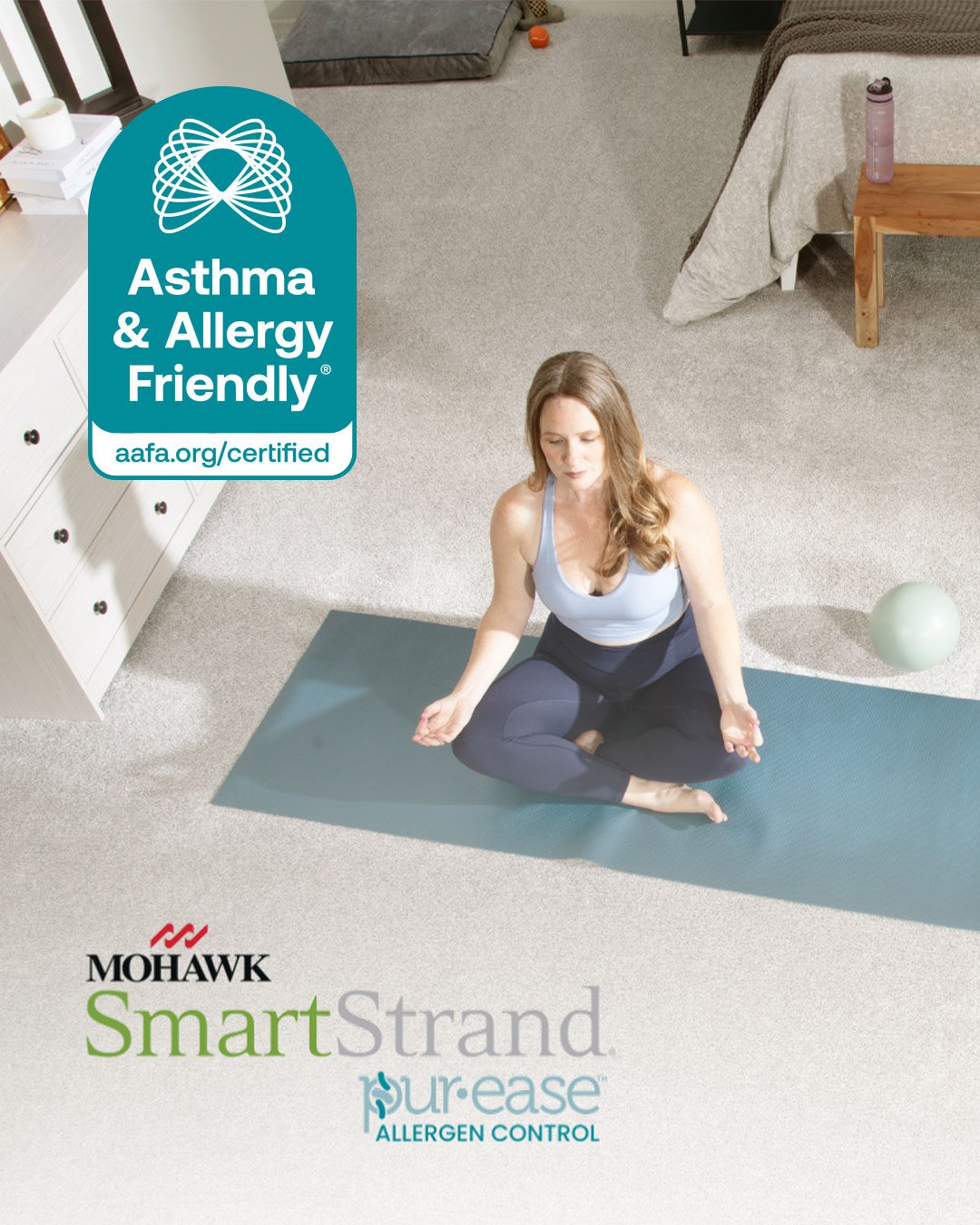
SmartStrand with Pur-Ease Technology is the first carpet to earn the Asthma & Allergy Friendly® Certification.
Pur-Ease is a built-in probiotic technology designed to naturally reduce common household allergens such as dust-mite allergen, pet dander, and pollen within the carpet.
How Does Pur-Ease Work?
Pur-Ease uses natural probiotics, similar to those found in products such as yogurt and dietary supplements. The probiotics are encapsulated and built into the carpet pile for longevity.
As the technology encounters allergens in the carpet, the probiotics help break them down and reduce them.
The technology is also designed to activate through everyday friction. Things like walking across the carpet and vacuuming help break open the capsules and activate the probiotics.
Once activated, the probiotics multiply and work to proactively reduce allergens in the carpet as you live on it.
That's what makes Pur-Ease particularly interesting to us. It's not simply about making carpet easier to clean after allergens have accumulated. The technology is built into the carpet to help address common allergens within the carpet itself.
Is Carpet Right for Your Home?
There isn't one flooring material that's right for every homeowner, and allergy concerns don't automatically mean you need to remove every carpeted room in your house.
Start by figuring out what may actually be causing your symptoms. Talk with your doctor about persistent allergy or asthma symptoms, and look at other potential sources of indoor allergens before assuming the flooring is responsible.
If carpet is still a concern, consider whether better cleaning and maintenance could solve the problem. If replacement makes sense, then choosing a carpet designed around the specific needs of your household can make a difference.
At Vonderheide Floor Coverings, we've been helping Central Illinois homeowners make those decisions since 1947. We can help you look at your pets, lifestyle, cleaning needs, moisture concerns, budget, and other factors before recommending a flooring option.
And if allergies are one of your biggest concerns, we'd encourage you to take a look at Mohawk SmartStrand with Pur-Ease Technology—the first carpet to earn Asthma & Allergy Friendly® Certification.
Stop by Vonderheide Floor Coverings to learn more about SmartStrand with Pur-Ease and talk with our flooring experts about whether it's a good fit for your home.
